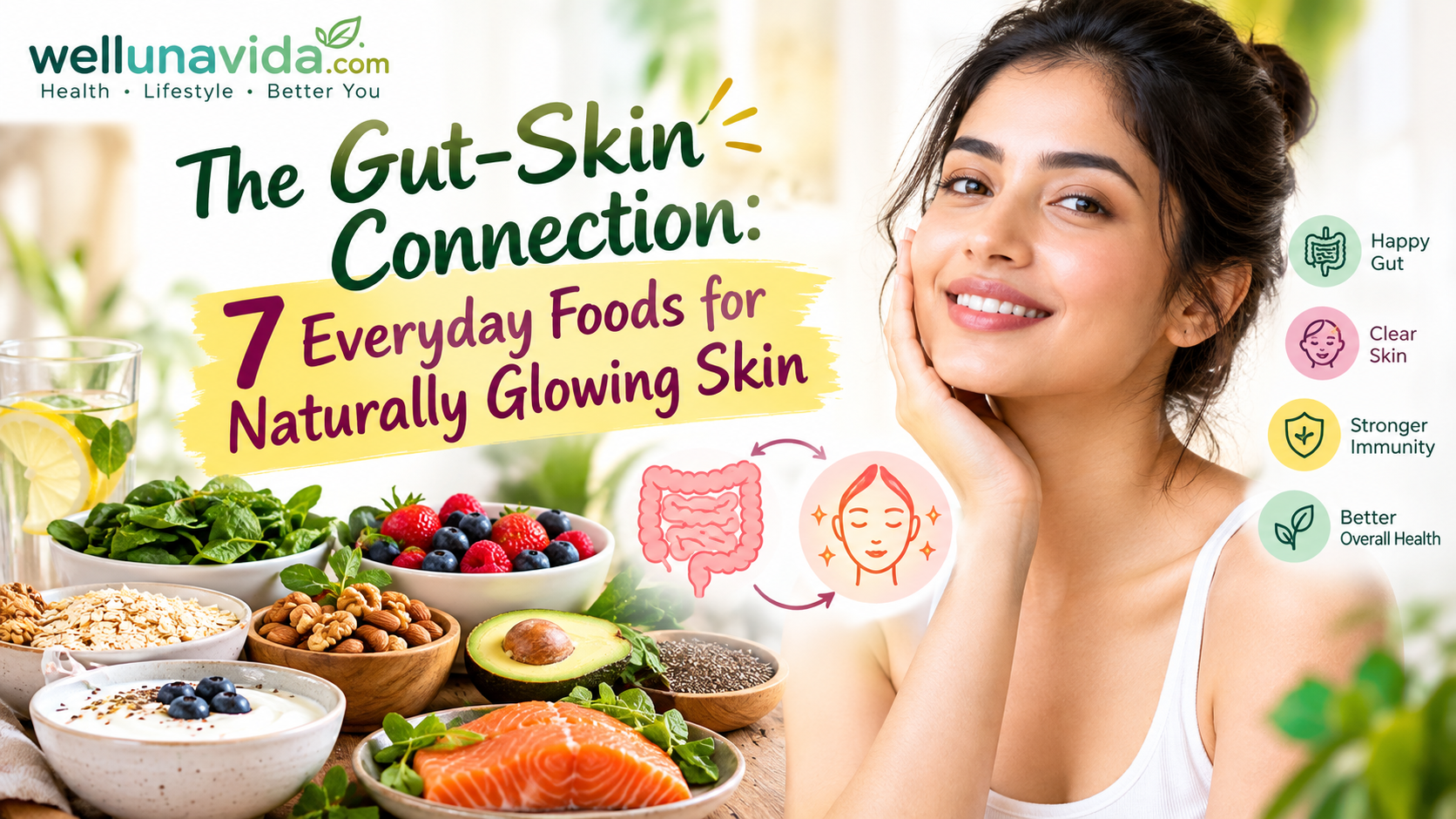
Could Glowing Skin Start in Your Gut? The Gut-Skin Connection and Everyday Foods That May Help
Simple foods and habits from your local grocery store that help your skin look its best from within
✍️ By Mohd Shameemsanjari | Wellunavida
Have you ever noticed that your skin looks dull after a stretch of fast food and late nights, but fresh and bright after a few weeks of eating well? That may not be a coincidence. Your skin often reflects what is happening inside your body, and a big part of that story is your gut. In this guide we explain the gut-skin connection in plain English, the everyday foods that support a natural glow, and the habits that can work against it.
🌟 Quick Highlights
- Nutrients are absorbed through your intestines, and your diet can show up on your skin.
- Ultra-processed food and added sugar may upset gut balance and speed up skin aging.
- Hydration, a colorful plant-rich diet, omega-3s, fermented foods and good sleep all support healthy skin.
🔬 What Is the Gut-Skin Axis?
When people say “gut,” they often mean the whole digestive tract. Food is partly broken down in the stomach and then moves into the intestines, which stretch about 20 feet, like a long plumbing pipe. This is where your body decides what gets absorbed and what stays out.
If your meals are rich in nutrients, those nutrients are absorbed and can support your skin. If your diet is mostly fast food, packaged snacks and sugary drinks, that can show up as dull, tired-looking skin too. This two-way link between your digestive system and your skin is called the gut-skin axis.
🧱 The “Kitchen Strainer” Inside Your Intestine
The inner lining of your intestine is made of cells joined together by tiny “tight junctions.” Think of them as a kitchen strainer: they let useful nutrients pass into your blood while keeping undigested food, harmful bacteria and other unwanted substances inside the gut.
A diet heavy in ultra-processed food can favor harmful bacteria over helpful ones, and researchers believe this may loosen those junctions. This is often called “leaky gut,” or more formally, increased intestinal permeability. When it happens, substances that should have stayed in the gut may enter the bloodstream and trigger inflammation.
Research suggests this kind of inflammation may play a role in skin concerns such as acne, eczema and psoriasis. Science in this area is still developing, but the connection is one of the most active topics in dermatology and nutrition today.
🥗 Best Foods for Glowing Skin
Skin-friendly nutrients such as lycopene, astaxanthin, anthocyanins and leucine may sound technical, but you can find them in ordinary grocery store foods: tomatoes, watermelon, zucchini, eggplant, okra, cucumber, blueberries, blackberries, wild salmon and lean protein. In other words, simple whole foods are often the best skin foods.
| Nutrient / Habit | Where to Find It | Why It Helps Skin |
|---|---|---|
| Lycopene | Tomatoes, watermelon, pink grapefruit | Antioxidant that helps protect skin from sun and environmental stress |
| Anthocyanins | Blueberries, blackberries, purple cabbage, eggplant | Plant pigments that support healthy skin cells |
| Omega-3 fatty acids | Salmon, sardines, walnuts, chia seeds, flaxseed | Supports the skin’s natural moisture barrier |
| Probiotics | Plain yogurt, kefir, sauerkraut, kimchi | Feed helpful gut bacteria |
| Hydration | Water, cucumber, watermelon, celery, zucchini | Keeps skin soft and plump |
| Quality sleep | 7 to 9 hours per night for most adults | Gives skin time to repair overnight |
💧 Hydration and the Skin Pinch Test
You can do a quick check at home. Gently pinch the skin on the back of your hand and let go. Well-hydrated skin usually snaps back right away. If it stays “tented” for a few seconds, it can be a sign of dehydration. Try drinking more water and eating water-rich foods like cucumber, watermelon, celery and zucchini. If it happens often, talk with your doctor.
🇰🇷 What Korean “Glass Skin” Teaches Us
Korean glass skin is popular across the US, and the diet behind it is surprisingly simple:
- Water-rich foods: Cucumber and watermelon help keep the body hydrated.
- Fermented foods: Kimchi is eaten with almost every meal, giving the gut a steady supply of probiotics. (Fun fact: Koreans say “kimchi” instead of “cheese” when taking photos!)
- Fish and tofu: Good sources of omega-3s and protein.
- Lots of vegetables: Fiber and antioxidants at every meal.
🚫 What to Limit for Better Skin
Alcohol and added sugar may be two of the biggest skin stressors. Excess sugar can attach to collagen, the protein that keeps skin firm, in a process called glycation. The result is the formation of AGEs (Advanced Glycation End-products), which may make skin look dull and age faster. High sugar intake has also been linked with joint stiffness. Swapping soda, sweetened coffee drinks and packaged desserts for water, berries and whole foods is a good place to start.
🥛 Fermented Foods You Can Find at Any US Grocery Store
You do not need to travel far to get probiotics. Many fermented foods are in your local supermarket:
| Food | Easy Ways to Enjoy It |
|---|---|
| Plain yogurt (live cultures) | Breakfast bowl with berries and walnuts |
| Kefir | Smoothies or a drinkable snack |
| Sauerkraut | On sandwiches, salads or grain bowls (choose refrigerated, unpasteurized) |
| Kimchi | With rice, eggs or tacos |
| Miso | Warm miso soup or salad dressing |
| Tempeh | Plant-based protein for stir-fries and sandwiches |
| Kombucha | Choose low-sugar options |
Almost every culture has its own fermented tradition: kimchi in Korea, miso in Japan, sauerkraut in Germany, sourdough bread in the US, and yogurt-based foods across the Middle East and South Asia. Travel tip: when you visit a new country or region, try a small portion of the local fermented food in the first few days. It gives your gut a gentle introduction to new bacteria so it is not overwhelmed. If you take medication or have a medical condition, check with your doctor first.
✅ Your Simple Daily Glow Plan
- Drink water through the day and add cucumber or watermelon to your meals.
- Eat a rainbow of vegetables and fruits.
- Add one fermented food daily, such as plain yogurt, kefir or sauerkraut.
- Include walnuts, chia seeds or fatty fish for omega-3s.
- Cut back on added sugar, alcohol and ultra-processed food.
- Protect your sleep, because your skin repairs itself at night.
❓ Frequently Asked Questions (FAQs)
Research suggests it may. The gut-skin axis describes how gut bacteria and inflammation may influence conditions like acne, eczema and dullness.
No. A varied diet with vegetables, fruits, omega-3 sources, fermented foods and enough water is generally considered better than relying on any single food.
Try the skin pinch test on the back of your hand. If the skin is slow to return to normal, you may need more fluids.
Plain yogurt with live cultures and kefir are easy starting points. Sauerkraut and kimchi are great additions once your stomach is used to them.
Too much sugar can bind to collagen and form AGEs, which may make skin look dull and age faster.
It may. Poor sleep has been linked with dull-looking skin, possibly because the body’s overnight repair process is disrupted.
📚 Read More
More health and wellness guides: Visit Wellunavida
Trusted external resources:
Harvard Health |
American Academy of Dermatology |
Mayo Clinic |
NIH
🎯 Conclusion
Healthy-looking skin is not built only with creams and serums. It may begin in the gut. By eating a balanced, colorful diet, staying hydrated, adding fermented foods, getting omega-3s, sleeping well and limiting sugar and alcohol, you may give your skin what it needs to look its best naturally. Start with one small change today, like a cup of plain yogurt with berries or an extra glass of water, and build from there.
Founder and author at Wellunavida, sharing general health and wellness information. Not a medical professional.